 Woolf Programs
 Davis, MSc in Management
 ESCP, EMIB


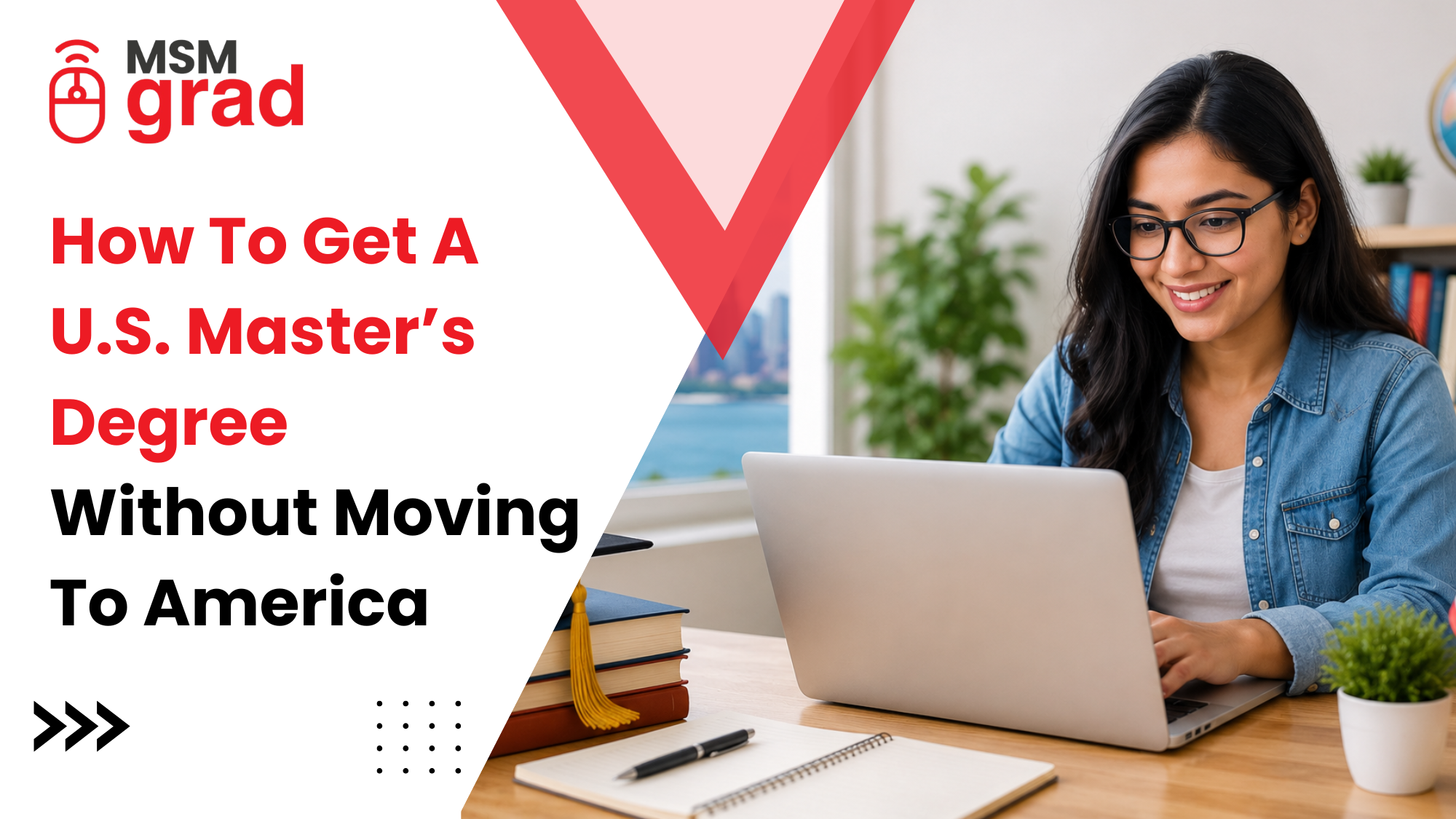
There’s a quiet shift happening in higher education right now, especially among working professionals in India. Five years ago, if someone said they wanted an American master’s degree, the assumption was obvious: they were preparing to leave the country.
That usually meant quitting a job, applying for visas, arranging finances, taking education loans, and mentally preparing to start life all over again in a new country.
Today, the conversation sounds different.
A lot of people still want the credibility and global exposure that comes with an American education. They still see value in studying management, leadership, business strategy, and global operations through a U.S.-focused curriculum. But increasingly, they are asking a more practical question:
“Can I earn a U.S. degree without putting my entire life on pause?”
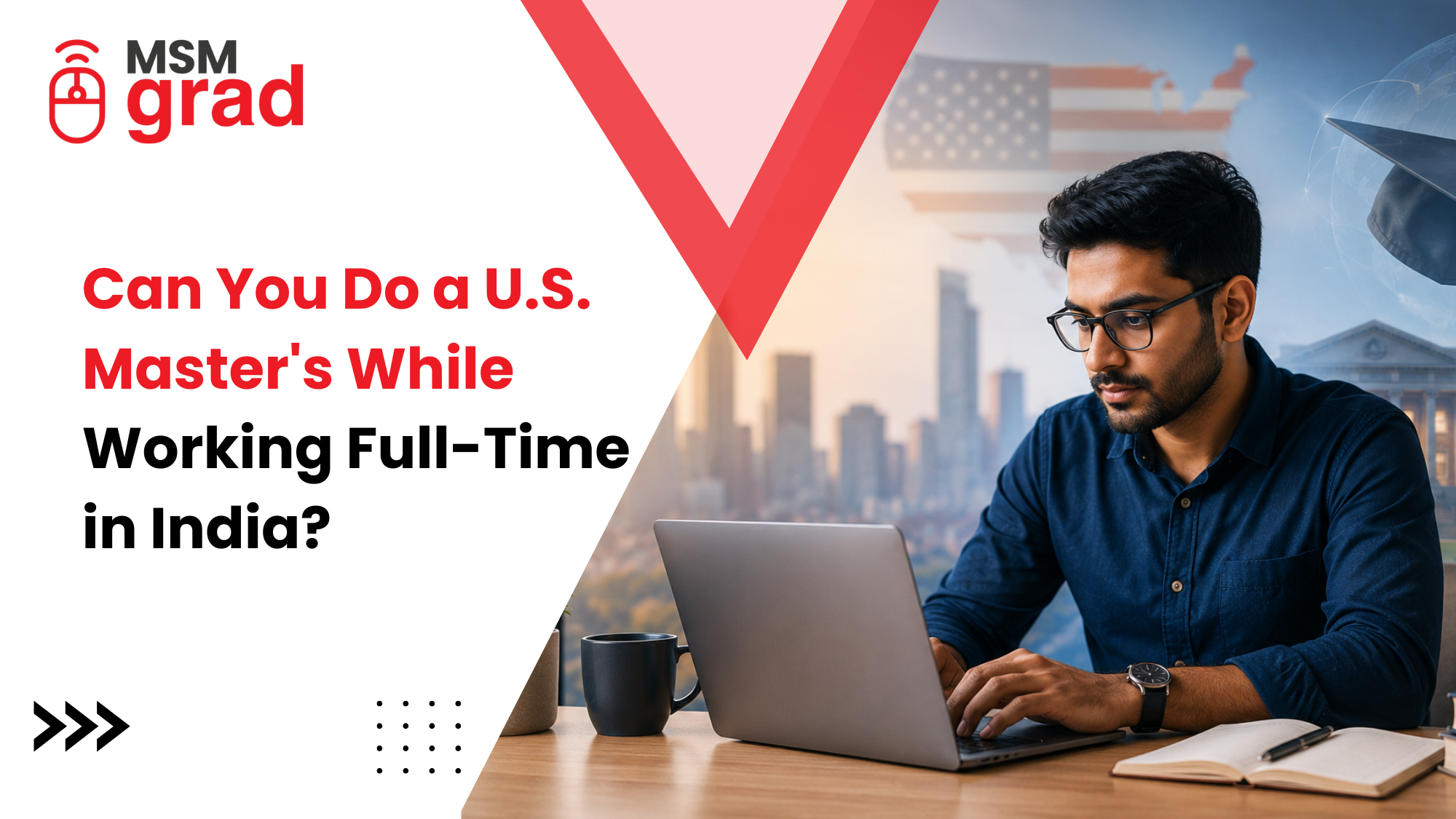
That question explains why searches for US masters degree online India have increased steadily over the last few years.
For many professionals, the goal is no longer just to “go abroad.” The real goal is career growth, international exposure, and long-term opportunities. If those things can be achieved without relocation stress and massive living expenses, the idea naturally becomes more appealing.
And honestly, that mindset makes sense.
A person working in Bangalore, Pune, Hyderabad, or Mumbai today may already have a stable career, family responsibilities, or financial commitments. Leaving all of that behind for two years is not always practical, even if the ambition to study internationally is still very real.
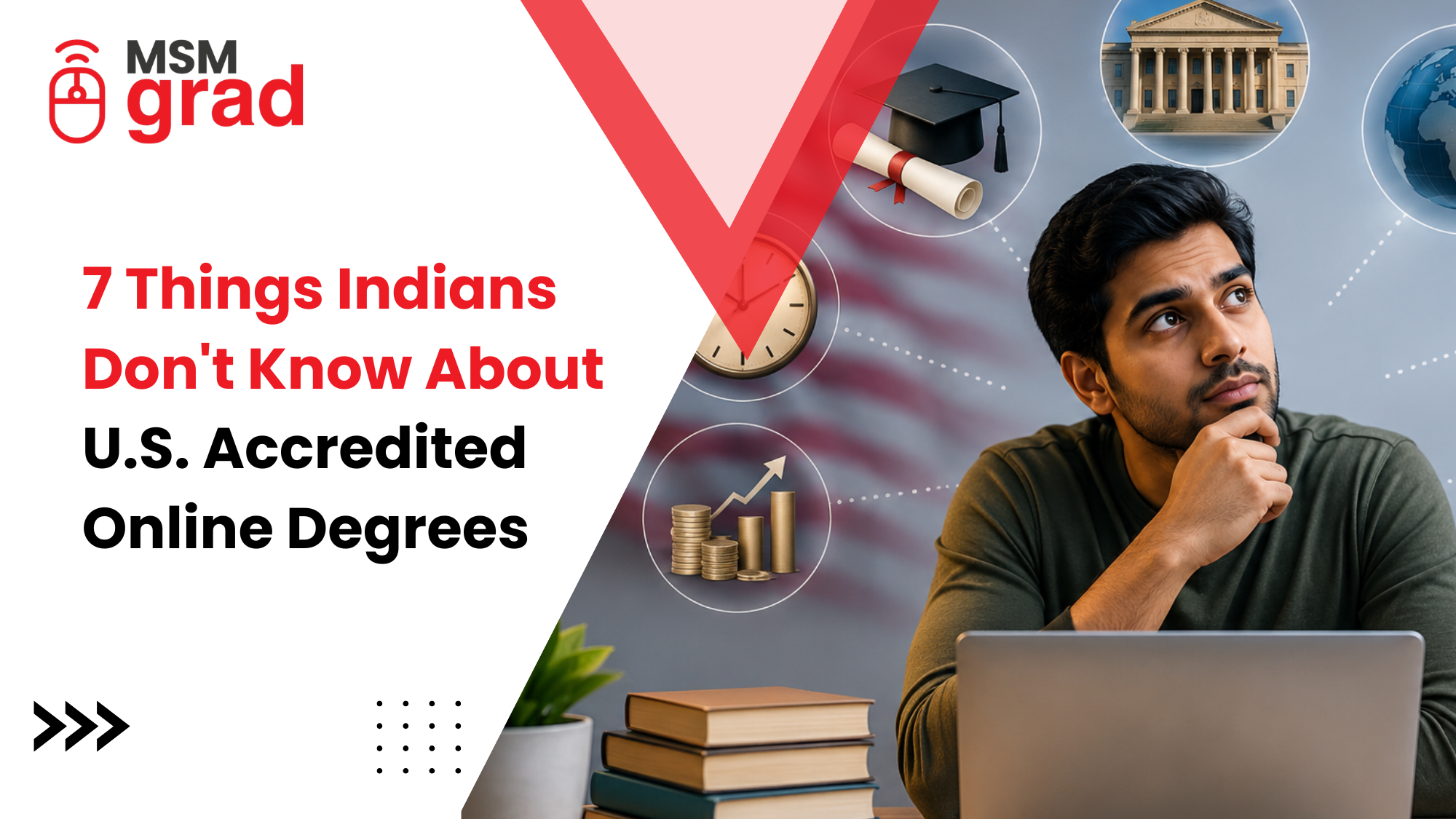
That is exactly where the idea of an online US degree for Indians has started becoming far more relevant.
Why Online U.S. Degrees Are Growing So Quickly In India
A few years ago, online education still carried hesitation around it. People questioned whether employers respected it. Students worried about credibility. Families often saw it as “less valuable” than traditional classroom learning.
That perception has changed dramatically.
Part of the reason is simple: the workplace itself changed.
Remote work became normal across industries. International companies started hiring employees across borders. Meetings moved online. Collaboration tools replaced physical office spaces. Learning itself became digital in many professional environments.
Once businesses adapted to virtual work, education naturally followed the same direction.
Today, many professionals pursuing a US masters degree online India are not doing it because they cannot study abroad physically. They are choosing online learning because it fits the reality of modern careers better.
Instead of pausing professional growth, they can continue building experience while studying simultaneously.
That overlap matters more than most universities openly acknowledge.
A working professional studying business management online often absorbs concepts differently compared to someone learning only through theory. They can connect classroom discussions directly with workplace challenges happening in real time.
For example, someone handling operations at a logistics company may study organizational strategy at night and notice those same patterns inside their company the next morning. A marketing professional learning leadership frameworks can apply those ideas immediately during team collaboration.
That kind of practical integration is difficult to recreate inside a purely academic environment.
The Real Cost of Studying Abroad Nobody Talks About Enough
Most students compare tuition fees before choosing a university. Very few calculate the emotional and financial weight of relocation itself.
Studying abroad is expensive beyond academics.
There’s housing, Healthcare, Transportation, Food, Currency exchange fluctuations, Insurance, Emergency expenses, Visa processing costs, Flight tickets, and Security deposits. In many cities in the United States, living expenses alone can become overwhelming for international students.
That does not mean moving abroad is a bad decision. For many students, it remains a life-changing experience.
But it also means students deserve a realistic comparison before committing to that path.
For a working professional in India earning steadily, leaving a job also creates another hidden cost: lost income.
This is one reason more learners are exploring the option to study in USA from home instead.
They are not necessarily avoiding international education. They are simply trying to make it financially sustainable.
An online degree allows them to continue earning while upgrading qualifications at the same time. That changes the entire return-on-investment equation.
Do Employers Actually Respect Online Degrees?
This is probably the most common concern people still have.
And honestly, it is a fair question.
There was a time when online education lacked structure and credibility. Some employers were skeptical because many programs focused only on recorded lectures with minimal engagement.
But online higher education today looks very different.
Most serious programs now include:
- Live faculty sessions
- Case-study discussions
- Interactive assignments
- Group collaboration
- Industry-focused learning
- Applied business projects
In many cases, employers now care more about what someone can actually do than how they attended lectures.
Think about the workplace in 2026 for a second.
Teams are remote. Meetings happen virtually. Global collaboration happens online daily. Employees learn new tools independently all the time. Self-management has become a professional skill in itself.
So when a professional completes a rigorous online master’s program while balancing work responsibilities, employers often see discipline and adaptability rather than weakness.
That shift is important.
The conversation is no longer:
“Was the degree online?”
It is increasingly:
“Can this person contribute effectively in a modern business environment?”
Why Management Education Still Matters In An AI-Driven World
People sometimes assume management degrees are becoming less important because technology dominates every conversation now.
But if anything, leadership and management skills are becoming more critical.
Companies are dealing with rapid change across almost every industry. AI tools are reshaping workflows. Remote teams operate across time zones. Businesses rely heavily on digital systems and cross-functional collaboration.
Technical skills matter, but organizations still need professionals who understand people, strategy, communication, operations, and decision-making.
That is why management-focused master’s programs continue attracting professionals from very different backgrounds.
A software engineer may eventually move into product leadership. A sales executive may transition into strategic management. Someone working in finance may step into operational leadership roles later in their career.
At some point, technical expertise alone stops being enough for career growth.
People also need broader business understanding.
That is where programs like MSM Grad’s Master of Science in Management become relevant for professionals trying to grow beyond execution-focused roles.
Who Usually Benefits Most From An Online U.S. Degree?
One thing people misunderstand about online international education is assuming it only works for senior professionals.
That is not really true anymore.
The audience has become much broader.
Students pursuing an online US degree for Indians today often include:
- Working professionals seeking promotions
- Early-career graduates wanting global credentials
- Entrepreneurs building businesses
- Career switchers moving into management roles
- Professionals unable to relocate internationally
- Individuals balancing family responsibilities alongside education
In many cases, flexibility matters more than prestige alone.
Someone may want international education but also need financial stability. Another person may not want to leave aging parents behind. Others may already have strong careers and simply do not want to interrupt professional momentum.
Traditional study-abroad systems were not designed around those realities. Online education is.
What Students Usually Struggle With In Online Learning
This part deserves honesty because online learning is not automatically easier.
In fact, many students find it harder than expected initially.
The flexibility sounds appealing until distractions start piling up.
There is no physical classroom forcing attendance. Nobody monitors study schedules daily. Motivation has to come internally.
The biggest challenges usually involve:
- Time management
- Consistency
- Balancing work and coursework
- Staying engaged actively
- Avoiding procrastination
The professionals who succeed in online programs are usually the ones who treat learning seriously rather than casually fitting it around life whenever convenient.
And honestly, that discipline often becomes valuable professionally too.
Why More Professionals Are Choosing To Study In USA From Home
The phrase study in the USA from home would have sounded unrealistic ten years ago.
Today, it reflects how global education itself is evolving.
International learning no longer requires physical relocation in every situation. Knowledge, collaboration, networking, and skill development increasingly happen digitally anyway.
This does not mean online education replaces every benefit of campus life. Living abroad still offers cultural experiences and exposure that online learning cannot fully replicate.
But for many professionals, the trade-off feels worth it.
They gain access to international education without:
- Leaving careers behind
- Taking massive relocation loans
- Interrupting income streams
- Managing immigration uncertainty
- Relocating families
That practicality explains why online international programs are no longer viewed as “alternative” education pathways. They are becoming mainstream choices for modern professionals.
How MSM Grad’s Master Of Science In Management Fits Into This Shift
Many learners exploring a US masters degree online India are not simply searching for another academic qualification.
They are trying to build long-term career mobility.
That is one reason programs like MSM Grad’s Master of Science in Management attract working professionals from different industries.
The program focuses on areas that matter directly in modern business environments, including:
- Leadership and organizational behavior
- Strategic management
- Business communication
- Decision-making
- Global business understanding
- Professional management practices
For professionals already working full-time, flexibility becomes equally important as curriculum quality.
The structure allows learners to continue managing careers while pursuing international education from India itself. And honestly, that balance matters far more than many institutions admit.
Most working adults cannot simply disappear from professional life for two years. They need education models that adapt to real-world responsibilities rather than ignoring them. That is why flexible learning pathways continue gaining momentum.
The Bigger Shift Happening In Global Education
Something larger is happening underneath all of this. People no longer think about careers in linear ways.
A person may work in sales today, transition into operations later, and eventually move into leadership. Someone with a technical background may eventually lead teams instead of writing code daily.
Modern careers evolve constantly. Because of that, education is becoming more continuous instead of something completed once in early adulthood. Professionals now upgrade skills repeatedly throughout their careers.
Online learning fits naturally into that reality because it allows people to keep growing professionally without disconnecting from work entirely. That flexibility may ultimately become one of the biggest reasons online international education continues growing over the next decade.
Is An Online U.S. Master’s Degree Worth It In 2026?
The answer depends entirely on what someone wants from the experience.
If the dream is cultural immersion and living abroad physically, traditional campus education may still make more sense.
But if the goal is career advancement, management skills, global exposure, and international education without relocation disruption, online programs are becoming increasingly practical and respected.
The workplace itself has changed too much for education to remain frozen in older models.
Professionals collaborate globally already. Companies hire remotely. Leadership happens across digital environments. Continuous learning matters more than one-time credentials.
And for many professionals in India, earning a U.S. degree from home simply feels more aligned with how careers work today.
FAQs
Can I earn a US masters degree online India without relocating?
Yes. Many international institutions now offer online learning pathways that allow Indian professionals to complete master’s programs remotely.
Do employers value an online US degree for Indians?
Most employers focus on skills, curriculum quality, and professional capability rather than whether the degree was completed online or on campus.
Is it cheaper to study in the USA from home compared to moving abroad?
In most cases, yes. Students avoid major living expenses such as housing, transportation, healthcare, and relocation costs.
Who should pursue an online U.S. master’s program?
Working professionals, entrepreneurs, career switchers, and graduates seeking flexible international education often benefit most from online programs.
What does MSM Grad’s Master of Science in Management focus on?
The program focuses on leadership, strategic thinking, business communication, and management skills designed for modern global work environments.