
 Woolf Programs
 Davis, MSc in Management
 ESCP, EMIB





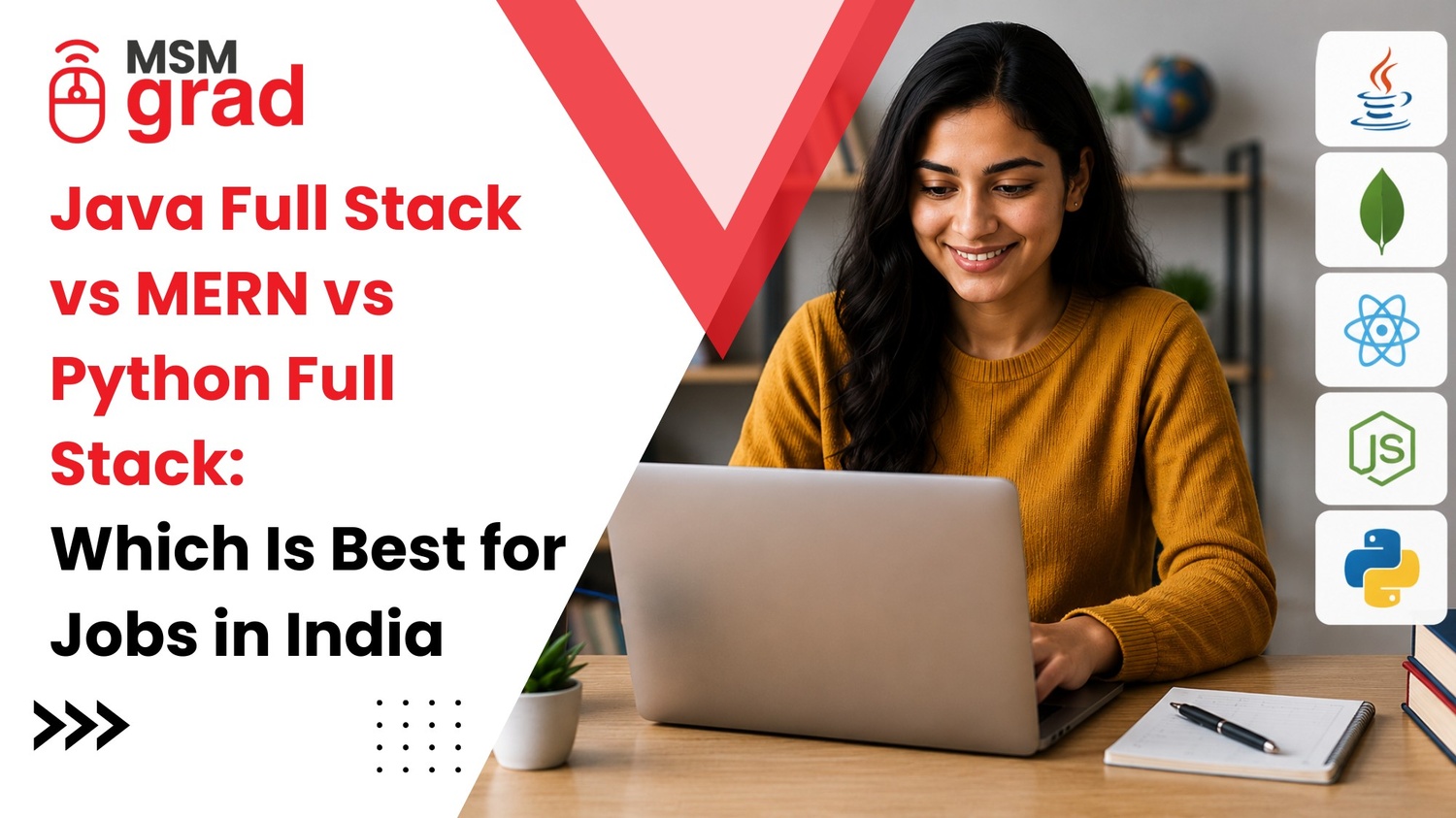
Almost every student entering software development in India eventually gets stuck on the same question.
Should I learn Java Full Stack? Is MERN better for jobs? Does Python have more future because of AI? The problem is that the internet answers this badly.
One video says Java is outdated. Another says MERN is oversaturated. Someone else claims Python will replace everything because of AI. After a point, it stops being advice and starts sounding like people defending whatever stack they personally learned first.
The truth is simpler. All three stacks are employable in India in 2026. Companies are hiring across all of them. The real difference is the kind of companies hiring, the type of work you end up doing, and how your career grows after the first few years.
Moreover, most students think about the wrong thing initially. They focus too much on “which stack pays highest” instead of asking which stack actually fits the market they want to work in. Because a Java developer working in enterprise banking software is living a very different career from someone building React dashboards inside a startup. Both are full stack developers. The paths just look different.
What Is Full Stack Development?
People use the term so casually now that it almost sounds meaningless.
In simple terms, a full stack developer works on both:
- frontend development
- backend development
Frontend is what users interact with. Buttons, dashboards, forms, layouts, animations.
Backend handles the actual logic behind the application. Databases, APIs, authentication systems, server-side workflows.
A full stack developer sits somewhere in the middle and understands both sides well enough to build complete applications.
That’s why the stack matters.
The stack decides:
- What backend language do you learn?
- What frameworks do you use?
- What types of companies hire you?
- How difficult does the learning curve become?
- What do salaries usually look like later?
And in India, those differences are becoming more visible now because hiring markets have matured a lot compared to five years ago.
Java Full Stack: Still The Safest Long-Term Bet?
Java has been declared “dead” online for almost fifteen years now. Meanwhile, banks still use it. Enterprise SaaS companies still use it. Insurance platforms still use it. Government systems still use it. That alone should tell you something.
A typical Java full stack setup includes:
- Java
- Spring Boot
- Hibernate
- REST APIs
- SQL
- React or Angular
The reason Java remains powerful in India is because enterprise hiring here is massive. Large organizations prefer technologies that are stable, scalable, and easier to maintain long term.
That’s exactly where Java fits.
If you look at hiring portals in 2026, Java jobs still massively outnumber many newer backend stacks.
Naukri and LinkedIn searches from May 2026 continue showing very strong demand for:
- Java backend developers
- Spring Boot developers
- Java full stack engineers
The learning curve, though, is definitely harder.
Java forces you to understand concepts properly. Object-oriented programming, architecture structure, backend logic, dependency management. Beginners usually take longer becoming comfortable with Java compared to JavaScript-based stacks. But that difficulty also filters the market a bit. A lot of recruiters still associate strong Java developers with stronger backend fundamentals.
Java Full Stack Salary In India 2026
According to AmbitionBox salary estimates:
- Freshers: ₹4–7 LPA
- Mid-level developers: ₹10–18 LPA
- Experienced engineers: ₹25 LPA+
And yes, salaries can go much higher inside product companies or fintech firms.
MERN Stack: Why Startups Still Love It
MERN became popular because developers realized they could use JavaScript almost everywhere. Frontend? JavaScript. Backend? JavaScript. APIs? JavaScript again. That flexibility made startup development much faster.
MERN stands for:
- MongoDB
- Express.js
- React
- Node.js
If Java Full Stack feels structured and enterprise-heavy, MERN feels lighter and faster.
That’s exactly why startups adopted it aggressively.
Small product teams love stacks that help them build and release features quickly. MERN fits that model well.
Most MERN hiring in India happens across:
- startups
- SaaS companies
- product firms
- e-commerce businesses
The frontend ecosystem around React especially remains extremely strong.
But there’s one thing students should understand honestly.
The entry-level MERN market has become crowded.
A huge number of students now learn React and basic Node.js because bootcamps heavily pushed MERN over the last few years. So simply knowing MERN basics no longer guarantees employability.
The developers standing out now are usually the ones who:
- understand backend architecture properly
- can deploy applications independently
- know APIs deeply
- work beyond tutorial-level projects
MERN Stack Salary In India 2026
Salary estimates from Glassdoor and AmbitionBox show:
- Freshers: ₹4–8 LPA
- Mid-level developers: ₹12–20 LPA
Good React developers still get paid extremely well in India. But competition is definitely higher at fresher level now.
Python Full Stack: Quietly Growing Faster Than People Realize
Python sits in a slightly different category. People don’t usually choose Python Full Stack only because they want web development. Many choose it because they eventually want flexibility into:
- AI
- automation
- machine learning
- data engineering
That crossover advantage matters a lot in 2026.
A Python full stack setup usually includes:
- Python
- Django or Flask
- APIs
- PostgreSQL or MySQL
- React or Vue
The reason Python demand keeps growing is because AI products increasingly rely on Python ecosystems already.
Companies building AI tools, internal automation systems, analytics dashboards, or machine-learning-integrated platforms often prefer developers who are comfortable working around Python infrastructure.
So while Python full stack jobs may not match Java’s enterprise volume yet, the growth trajectory is strong.
Python Full Stack Salary In India 2026
According to salary estimates:
- Freshers: ₹4–7 LPA
- Experienced developers: ₹12–22 LPA
Python especially becomes valuable later if someone wants to move toward AI-adjacent engineering roles.
So Which Stack Should You Actually Learn?
This depends entirely on what kind of career you want.
Choose Java Full Stack if:
- you want enterprise or MNC jobs
- stability matters to you
- you enjoy backend-heavy systems
- banking, fintech, or enterprise software interests you
Choose MERN if:
- you prefer startup environments
- you enjoy frontend development
- you like building products quickly
- flexibility matters more than structure
Choose Python Full Stack if:
- you want future AI crossover opportunities
- automation interests you
- you want flexibility beyond web development
None of these stacks are “bad choices.”
The problem usually isn’t the stack. It’s shallow learning. A student who deeply understands Java will outperform someone who half-learned MERN because it looked trendy online. That pattern repeats constantly in hiring.
Where MSM Grad Fits Into This
One issue recruiters repeatedly bring up today is that students know frameworks but struggle with actual implementation. They know syntax. They struggle to build production-ready systems. That gap is exactly why industry-aligned learning has become important.
MSM Grad’s Full Stack Java Program is designed around practical job readiness instead of only theory-heavy instruction. The curriculum focuses on technologies companies actively hire for, including Spring Boot, APIs, databases, frontend integration, and enterprise development workflows aligned with current industry expectations and NASSCOM-oriented learning standards. And honestly, that practical exposure matters more now than simply collecting certificates. Hiring teams in 2026 care less about course completion and far more about whether candidates can actually build, debug, and ship applications properly.