 Woolf Programs
 Davis, MSc in Management
 ESCP, EMIB







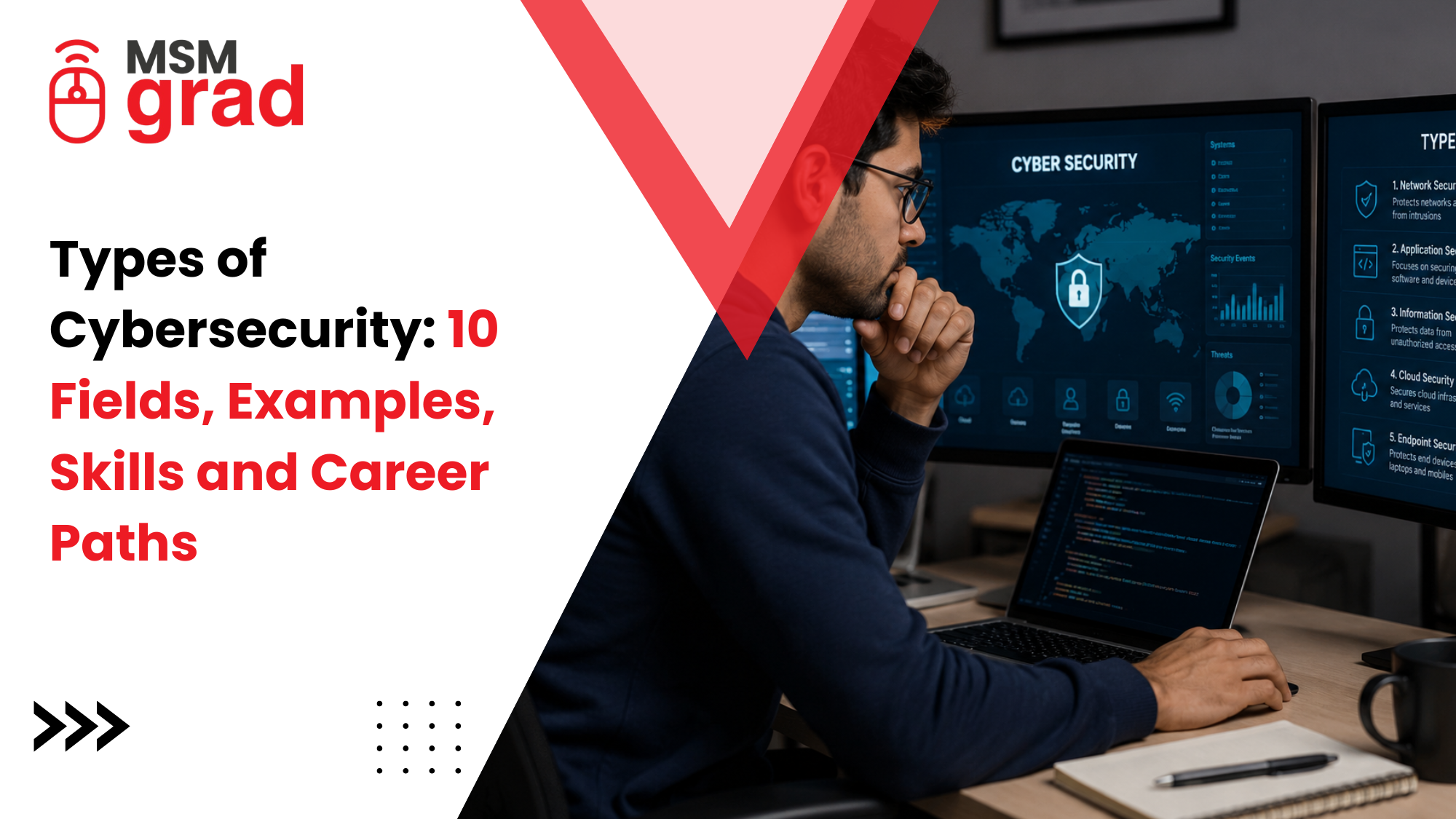
The main types of cybersecurity include network, application, cloud, endpoint, data, identity, mobile, Internet of Things, operational technology and critical infrastructure security. Each field protects a different part of an organization’s technology environment, although several areas often overlap in real security work.
What Is Cybersecurity?
Cybersecurity is the practice of protecting digital systems, networks, devices, services and data from attack, misuse, disruption or unauthorized access. NIST describes cybersecurity as protecting information by preventing, detecting and responding to attacks, and also connects it to confidentiality, integrity and availability.
One thing students should understand early: cybersecurity fields are not the same as cyberthreats, frameworks or services.
Cybersecurity fields are areas of practice, such as cloud security or application security. Cyberthreats are attack methods, such as phishing, ransomware or malware. Security frameworks, such as the NIST Cybersecurity Framework, help organizations manage cybersecurity risk. Security services, such as managed security services, are ways companies outsource parts of security operations.
Types of Cybersecurity at a Glance
| Type | What it protects | Example threat | Related career |
| Network security | Networks and traffic | Unauthorized access | Network security engineer |
| Application security | Software and APIs | Injection attacks | Application security engineer |
| Cloud security | Cloud workloads and data | Misconfiguration | Cloud security specialist |
| Endpoint security | Laptops and devices | Malware | Endpoint security analyst |
| Data security | Sensitive information | Data theft | Data security analyst |
| Identity and access security | User identities and permissions | Account takeover | Identity and access management specialist |
| Mobile security | Smartphones and tablets | Malicious applications | Mobile security engineer |
| Internet of Things security | Connected devices | Device exploitation | Internet of Things security specialist |
| Operational technology security | Industrial systems | Infrastructure disruption | Operational technology security analyst |
| Critical infrastructure security | Essential public systems | Targeted cyberattack | Critical infrastructure security specialist |
1. Network Security
Network security protects the systems that allow devices, users and applications to communicate. This includes routers, firewalls, switches, virtual private networks and network traffic.
A real-world example is an attacker trying to enter a company network through exposed remote access services. Common methods include firewalls, intrusion detection systems, segmentation, secure network access and monitoring.
Relevant skills include TCP/IP basics, firewall rules, packet analysis, intrusion detection and network troubleshooting. Common roles include network security engineer, security operations center analyst and network defense specialist.
2. Application Security
Application security protects software, websites, mobile apps and application programming interfaces from weaknesses that attackers can exploit.
A simple example is an attacker abusing a poorly protected API endpoint to access data they should not see. OWASP’s API Security Top 10 includes risks such as broken object level authorization, broken authentication, security misconfiguration and improper inventory management.
Common methods include secure coding, code reviews, penetration testing, software composition analysis and threat modeling. Skills include programming, web security, API testing, vulnerability assessment and secure development practices. Roles include application security engineer, product security engineer and DevSecOps specialist.
3. Cloud Security
Cloud security protects cloud platforms, applications, storage, identities and workloads across environments such as Amazon Web Services, Microsoft Azure and Google Cloud.
A common problem is misconfiguration. For example, a storage bucket may be exposed publicly, or a cloud identity may have more permissions than needed. Cloud security work often uses identity controls, encryption, logging, secure architecture and configuration management.
Skills include cloud basics, identity and access management, network security, infrastructure as code and cloud monitoring. Roles include cloud security specialist, cloud security architect and cloud compliance analyst.
4. Endpoint Security
Endpoint security protects devices used by employees and teams, such as laptops, desktops, tablets and servers.
A common example is malware entering a laptop through a downloaded file or unsafe link. CISA’s ransomware guidance covers common defensive steps across on-premises, cloud, mobile and personal devices, including proper configuration and enabled security features.
Common technologies include antivirus, endpoint detection and response, patch management, disk encryption and device control. Skills include operating systems, malware basics, log review, incident triage and endpoint hardening. Roles include endpoint security analyst, security operations analyst and incident response analyst.
5. Data Security
Data security focuses on protecting sensitive information wherever it lives, whether in databases, files, cloud storage, applications or backups.
A real-world example is customer data being stolen because access permissions were too open. Data security methods include encryption, data classification, access controls, data loss prevention, backup protection and monitoring.
Skills include database basics, encryption concepts, access review, privacy awareness and data governance. Roles include data security analyst, information security analyst, privacy analyst and data protection specialist.
6. Identity and Access Security
Identity and access security protects user accounts, permissions and authentication systems. In many organizations, identity is the front door to everything else.
A common threat is account takeover, where an attacker steals credentials and signs in as a real user. CISA guidance often points organizations toward stronger access controls such as multifactor authentication, least privilege and modern access security approaches.
Common methods include multifactor authentication, single sign-on, privileged access management, access reviews and zero trust principles. Skills include directory services, authentication, identity governance and policy design. Roles include identity and access management specialist, access governance analyst and zero trust security analyst.
7. Mobile Security
Mobile security protects smartphones, tablets, mobile applications and the data moving through them.
A common example is a malicious mobile app collecting sensitive information or a lost phone exposing company data. Mobile security methods include mobile device management, app permissions, secure configuration, encryption, remote wipe and user awareness.
CISA provides mobile device cybersecurity guidance focused on practical steps users and organizations can take to reduce mobile-related risk.
Relevant skills include mobile operating systems, device management, app security basics and privacy controls. Roles include mobile security engineer, endpoint security specialist and mobile application security tester.
8. Internet of Things Security
Internet of Things security protects connected devices such as smart cameras, sensors, medical devices, industrial sensors and smart home equipment.
A real-world example is an attacker exploiting a poorly secured connected device that still uses default credentials. Internet of Things security methods include device authentication, secure firmware, patching, network segmentation and monitoring device behavior.
Skills include embedded systems basics, networking, device testing, firmware awareness and secure communication. Roles include Internet of Things security specialist, embedded security engineer and connected device security analyst.
9. Operational Technology Security
Operational technology security protects systems that control physical processes, such as manufacturing equipment, energy systems, water systems and industrial control systems.
This field is different from normal office information technology because the systems often affect physical operations. CISA and international partners have released guidance on operational technology cybersecurity for critical infrastructure organizations, reflecting how important these systems are to safety and resilience.
Common methods include network isolation, asset inventory, industrial monitoring, secure remote access and incident response planning. Skills include industrial control systems, safety awareness, network segmentation and risk assessment. Roles include operational technology security analyst, industrial control systems security engineer and critical systems security consultant.
10. Critical Infrastructure Security
Critical infrastructure security protects essential public and economic systems, such as energy, water, transportation, healthcare, communications, finance and government services.
A real-world example is a targeted cyberattack against a water system, hospital or energy provider. CISA notes that critical infrastructure sectors are part of a complex, interconnected ecosystem, and threats to these sectors can affect national security, the economy, public health and safety.
Common methods include resilience planning, incident response, sector-specific risk assessment, operational technology security, threat intelligence and coordination with public agencies. Skills include risk management, policy, incident coordination, governance and technical security awareness. Roles include critical infrastructure specialist, cyber resilience analyst and infrastructure security consultant.
Cybersecurity Types vs. Cyberthreats
Ransomware, malware, phishing, social engineering and denial-of-service attacks are threats, not branches of cybersecurity.
For example, phishing can affect identity security. Ransomware can affect endpoint security, network security, cloud security and data security. A denial-of-service attack may affect network or application availability. CISA’s cybersecurity scenarios include threat vectors such as ransomware, insider threats and phishing, which shows how threats can cut across several security fields.
This distinction matters because many beginner articles mix up fields and threats. A field describes what security professionals protect. A threat describes what attackers may do.
Which Type of Cybersecurity Should You Study?
The best area depends on how you like to work.
| Your interest | Cybersecurity fields to explore |
| Coding and software development | Application security, API security, secure software development |
| Networks and infrastructure | Network security, endpoint security, security operations |
| Cloud computing | Cloud security, identity and access security |
| Investigation and incident response | Digital forensics, endpoint security, threat analysis |
| Risk, governance and compliance | Data security, cyber risk, governance, critical infrastructure |
| Identity management | Identity and access security, zero trust, privileged access |
| Industrial systems | Operational technology security, critical infrastructure security |
| Connected devices | Internet of Things security, embedded security |
Beginners often start with network security, endpoint security or basic security operations because these areas build a strong foundation. Learners with coding experience may prefer application security. People interested in business risk may move toward governance, compliance or identity management.
How a Master’s Degree Covers Cybersecurity Fields
A postgraduate cybersecurity program may combine technical security, risk management, cloud systems, digital forensics, governance, research and strategic decision-making. It may not cover every field equally, so students should always check the official curriculum before applying.
MSM Grad offers an online cybersecurity master’s program through Woolf for learners who want broader postgraduate preparation. The official qualification is Master of Science in Computer Science, Cybersecurity. The program includes modules such as Advanced Computer Networks and Security, Cryptography and Information Security, Cloud Security and Architecture, Digital Forensics and Incident Response, Ethical Hacking and Penetration Testing, Risk Management and Governance, Machine Learning for Cybersecurity and a Capstone Dissertation.
Students should review the curriculum, admission requirements, learning format and graduation requirements to confirm whether the program matches the cybersecurity fields they want to explore.
Frequently Asked Questions
What are the main types of cybersecurity?
The main types of cybersecurity include network security, application security, cloud security, endpoint security, data security, identity and access security, mobile security, Internet of Things security, operational technology security and critical infrastructure security. These areas often overlap because real cyber risks rarely stay inside one neat category.
What are the five major areas of cybersecurity?
A simple five-area model includes network security, application security, cloud security, data security and identity security. This is useful for beginners, but it leaves out important specialized areas such as endpoint, mobile, Internet of Things, operational technology and critical infrastructure security.
Is ethical hacking a type of cybersecurity?
Ethical hacking is better understood as a method or practice within cybersecurity, not a separate field by itself. It is often connected to penetration testing, application security, network security and vulnerability assessment. The goal is to find weaknesses legally before attackers exploit them.
Is cybersecurity different from information security?
Yes, but they overlap. Information security focuses on protecting information in all forms. Cybersecurity focuses on protecting digital systems, networks, devices and data from cyber risks. In many workplaces, the terms are used closely together, but they are not always identical.
Which cybersecurity field requires the most coding?
Application security usually requires the most coding because professionals need to understand how software, APIs and vulnerabilities work. Cloud security, security automation and malware analysis may also require scripting or programming. Governance and compliance roles usually need less coding, but they still require technical understanding.
Which type of cybersecurity is best for beginners?
Network security, endpoint security and basic security operations are often good starting points because they build core understanding of systems, devices, attacks and monitoring. Learners with a programming background may start with application security, while business-focused learners may begin with risk and governance.
What is the difference between cybersecurity types and cyberthreats?
Cybersecurity types describe areas of defense, such as cloud security or data security. Cyberthreats describe attack methods, such as phishing, ransomware or malware. A single threat can affect several cybersecurity fields at once.
Can a master’s degree prepare students for different cybersecurity fields?
Yes, a well-designed master’s degree can introduce students to several cybersecurity fields, especially when it includes technical modules, risk management, projects and research. It should still be supported by practice, labs, certifications where useful and hands-on experience.
Final Thoughts
The types of cybersecurity are easier to understand when you connect each field to what it protects. Network security protects traffic. Application security protects software. Cloud security protects cloud environments. Identity security protects access. Operational technology security protects industrial systems.
For learners, the next step is not to memorize every category. It is to choose the field that fits your strengths, then build the right skills around it.
Students who want structured postgraduate learning can explore MSM Grad’s online cybersecurity master’s program through Woolf and compare how its curriculum connects with the different types of cybersecurity discussed in this guide.