 Woolf Programs
 Davis, MSc in Management
 ESCP, EMIB




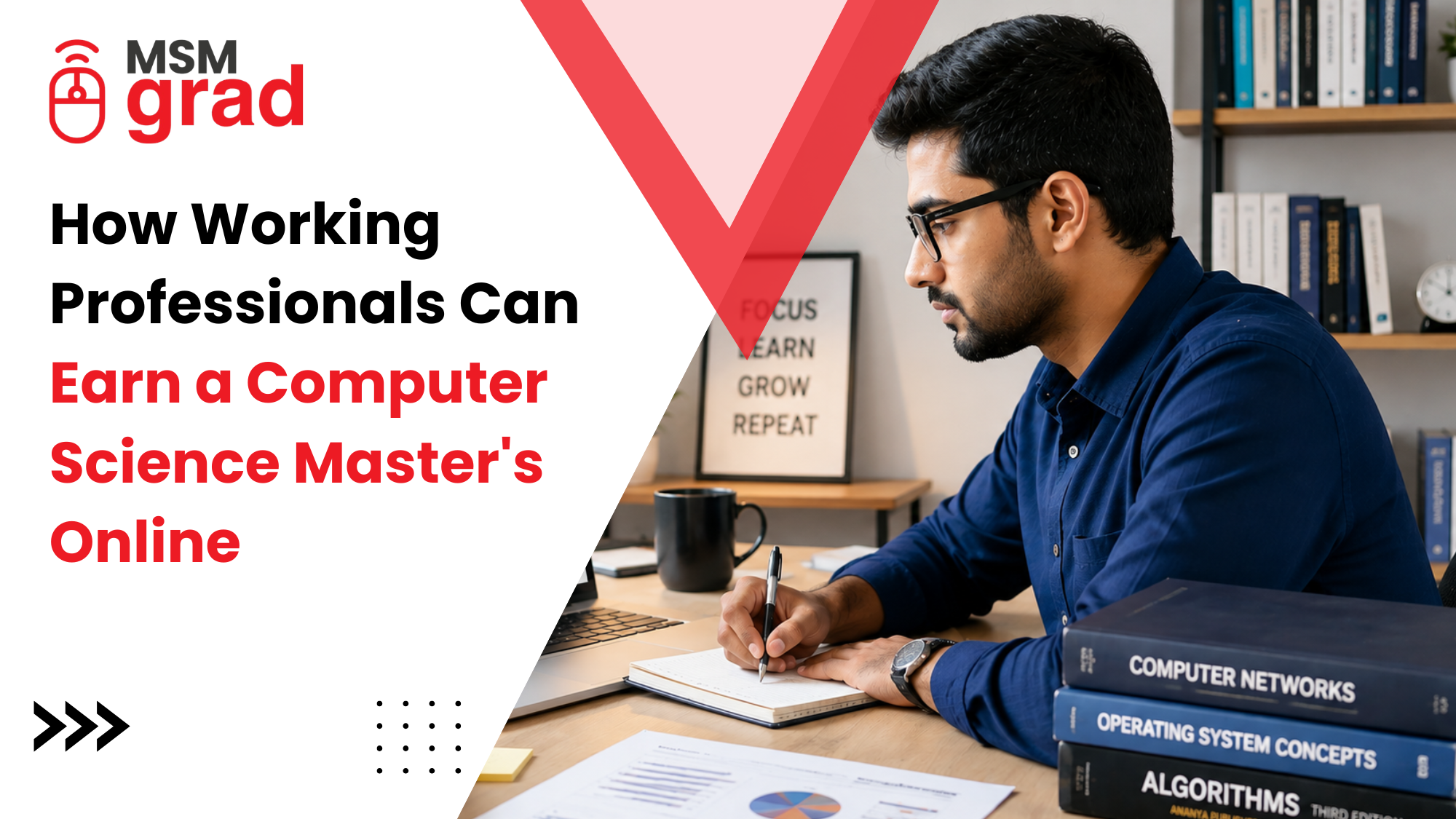
There’s a quiet moment in the life of nearly every professional when they get the idea.
Perhaps it occurs when a younger employee is promoted over them due to their technical expertise. Or maybe it’s at a team meeting when the subject turns to artificial intelligence, cloud computing, cybersecurity and data engineering, and you find yourself trying to keep up with an industry that is moving at a faster pace than ever before.
Or perhaps it’s much more straightforward.
You enjoy your job, but you know you can do more.
The problem is that life never stops while you’re in school. There are deadlines, monthly bills, aging parents, children to care for and responsibilities that can’t just be postponed for two years.
That’s why the Master of Science in Computer Science online is one of the most useful educational options available for working professionals today.
Ten years ago, the norm was to leave your career and attend graduate school. Today, professionals are opting for a different way. They are progressing in their learning and also in their careers, earning salaries, and putting what they learn into practice in their workplaces.
If you’ve been thinking that this path is out of reach for someone who is working full time, then you’re not alone.
It does, however, mean knowing what online learning will look like in 2026, and how to make it work for your life.
Why More Professionals Are Choosing an Online Master’s Degree
Career growth rarely happens by accident. Technology is transforming almost every industry today. Data systems are essential for healthcare organizations. Financial institutions spend a lot on cybersecurity. Predictive analytics is used by retail businesses. AI and IoT are used in manufacturing companies to automate operations.
Computer science isn’t confined to software companies anymore.
The U.S. Bureau of Labor Statistics predicts that demand for technological innovation and digital transformation will drive employment growth in computer and information technology occupations to outpace the average growth rate for all occupations over the next several years.
If you are already employed, getting back to school is not always about a career change, but about staying on top of the game.
An online graduate program allows professionals to:
- Upgrade technical expertise
- Transition into emerging fields
- Qualify for leadership opportunities
- Increase earning potential
- Build specialized knowledge
- Stay competitive without leaving employment
The biggest advantage?
You don’t have to choose between learning and earning.
What Does a Master of Science in Computer Science Online Actually Look Like?
A common misunderstanding about online learning is that it is just a video call to the classroom.
There are far more modern programs that work completely differently.
Most Master of Science in Computer Science online programs are designed around flexibility.
Students may not be required to attend campus lectures at a specific time, but coursework is usually delivered via digital platforms, allowing students to access content at their own time.
This often includes:
- Recorded lectures
- Interactive assignments
- Discussion forums
- Virtual labs
- Project-based assessments
- Faculty feedback sessions
- Group collaborations
For working professionals, this structure matters enormously.
You might study before your morning commute.
Someone else may complete assignments after putting their children to bed.
Another student could dedicate weekends to project work.
The learning happens around your life—not the other way around.
The Flexibility Working Professionals Need
Ask any full-time employee considering graduate school what concerns them most, and you’ll hear the same response.
“I don’t know if I’ll have enough time.”
It’s a valid concern.
A graduate degree is challenging by design.
However, flexibility makes it manageable.
Asynchronous Learning
Asynchronous learning means you aren’t required to log in at specific times every day.
Instead, you access materials when your schedule allows.
For professionals juggling meetings, travel, and unpredictable workloads, this model provides breathing room.
Part-Time Study Options
Many online programs allow students to reduce their course load.
Rather than accelerating through multiple subjects simultaneously, learners can progress steadily over time.
While this may extend graduation timelines slightly, it creates sustainability.
Learning From Anywhere
- You don’t need to relocate
- You don’t lose years of work experience
- You don’t sacrifice income
- You simply need internet access, discipline, and commitment
Balancing Work and Study Without Burning Out
Let’s be honest.
- There will be difficult weeks
- Quarter-end reporting cycles
- Unexpected client demands
- Family emergencies
- Graduate education isn’t easy
But thousands of professionals successfully navigate it because they build systems.
Create Dedicated Study Blocks
Consistency matters more than intensity.
Three focused study sessions each week often outperform sporadic all-night efforts.
Communicate With Family
Support systems matter.
Discuss expectations with partners and family members so everyone understands your temporary commitments.
Use Employer Flexibility
Many organizations support employee education through flexible scheduling.
You may be surprised by how accommodating managers can be when they see your commitment to professional growth.
Accept Imperfection
Not every assignment will receive your absolute best energy.
Some weeks are about progress, not perfection.
Is an Online Degree Respected by Employers?
This question still surfaces frequently.
The answer has changed dramatically over the past decade.
Employers increasingly focus on three things:
- The quality and accreditation of the institution
- The skills you demonstrate
- Your ability to apply knowledge effectively
How you completed the degree matters far less than what you learned.
The normalization of remote work accelerated acceptance of online education.
Hiring managers themselves often hold online credentials.
Many organizations now actively encourage employees to pursue graduate education while working.
What they value isn’t the classroom format.
They value capability.
Career Opportunities After Graduation
A Master of Science in Computer Science online can support advancement across numerous career paths.
Software Engineer
Graduate education deepens understanding of software architecture, algorithms, and system design.
These professionals build applications that power businesses and everyday experiences.
Artificial Intelligence Specialist
Organizations increasingly invest in machine learning and intelligent systems.
AI specialists develop solutions that automate decision-making and uncover insights.
Data Engineer
Data engineers design infrastructure that enables organizations to collect, organize, and process enormous amounts of information.
Without them, analytics initiatives struggle to function effectively.
Cloud Engineer
As companies migrate operations to cloud environments, demand for cloud expertise continues growing.
These professionals manage deployment, scalability, and infrastructure optimization.
Cybersecurity Specialist
Security threats evolve constantly.
Advanced education helps professionals understand risk management, threat detection, and defensive strategies.
Technical Project Manager
Professionals with technical depth and business understanding often transition into leadership roles overseeing multidisciplinary teams.
Can You Afford It?
Financial concerns stop many professionals before they even begin exploring options.
The reality is more nuanced.
When comparing online programs to traditional campus experiences, professionals often avoid expenses associated with:
- Relocation
- Campus housing
- Daily commuting
- Lost wages
- Career interruptions
You continue earning while studying.
That changes the return-on-investment equation significantly.
Employer Tuition Assistance
Many employers provide:
- Tuition reimbursement
- Professional development budgets
- Education stipends
- Certification support
It’s worth asking.
The answer may surprise you.
Think Long-Term
Graduate education shouldn’t be evaluated solely through upfront costs.
Consider potential outcomes:
- Higher salaries
- Expanded opportunities
- Leadership positions
- Career resilience
Viewed through that lens, education becomes an investment rather than simply an expense.
Who Benefits Most From This Degree?
Online graduate programs aren’t only for software developers.
Students often come from diverse backgrounds.
Early-Career Professionals
Those seeking faster advancement often use graduate education to stand out.
Mid-Career Employees
Professionals looking to pivot into technical leadership frequently pursue advanced study.
Career Changers
Individuals from adjacent fields sometimes use computer science education to enter technology-focused roles.
Managers
Leaders overseeing technical teams often seek a deeper understanding of the systems shaping their organizations.
What Skills Do Students Develop?
The specific curriculum varies across institutions, but modern computer science programs typically emphasize practical relevance.
Students may strengthen capabilities in areas such as:
- Programming principles
- Software engineering
- Database systems
- Cloud technologies
- Artificial intelligence
- Machine learning
- Data structures
- Cybersecurity concepts
- Systems architecture
- Problem-solving methodologies
Perhaps most importantly, they develop analytical thinking.
Technology changes.
The ability to learn continuously does not.
The Evolution of Online Learning
There was a time when online education carried skepticism.
People imagined isolated learners clicking through slides without support.
Today’s experience is entirely different.
Students collaborate internationally.
Faculty provide personalized guidance.
Projects simulate workplace challenges.
Learning communities emerge despite geographical distance.
The quality of engagement has evolved dramatically.
For working professionals, this evolution matters because it means online education no longer feels like a compromise.
It feels intentional.
Questions Professionals Ask Before Enrolling
“Am I too old to go back to school?”
No.
Many graduate students begin programs in their thirties, forties, and beyond.
Professional experience often becomes an advantage.
“Will I be able to keep up academically?”
Yes.
Success depends less on innate brilliance and more on consistency, curiosity, and discipline.
“What if my job becomes demanding?”
Life happens.
Flexible structures help students adapt during busy periods.
“Is the workload manageable?”
It requires commitment.
But thousands of professionals complete graduate degrees each year while balancing careers and families.
How MSM Grad Supports Working Professionals
For professionals exploring technology-focused graduate education, flexibility matters just as much as academic quality.
MSM Grad‘s programs are designed with the realities of adult learners in mind.
Students aren’t expected to pause their careers.
Instead, they gain opportunities to advance professionally while continuing to fulfill existing responsibilities.
The focus extends beyond theoretical concepts.
Learners build knowledge that can be applied directly within modern workplaces.
Whether your goal involves moving into software development, expanding into AI-related fields, strengthening cloud expertise, or positioning yourself for future leadership opportunities, the right graduate program should support—not disrupt—the life you’ve already built.
Final Thoughts
The idea that education requires putting your career on hold belongs to another era.
Today’s professionals are proving that meaningful advancement can happen alongside employment, family responsibilities, and everyday life.
Will earning a graduate degree while working full-time require sacrifice?
Absolutely.
- There will be evenings when studying feels exhausting.
- Weekends when assignments compete with social plans.
- Moments of doubt.
But there will also be milestones.
- The first project you complete.
- The new concept that finally clicks.
- The interview where your confidence changes.
- The promotion you once thought was out of reach.
A Master of Science in Computer Science online isn’t simply about collecting another credential.
It’s about expanding what’s possible without walking away from everything you’ve already worked to build.
Sometimes career growth doesn’t require starting over.
Sometimes it starts exactly where you are.
FAQs
Can I complete a Master of Science in Computer Science online while working full-time?
Yes. Many programs are specifically designed for working professionals through flexible and asynchronous learning models.
How many hours should I expect to study each week?
Requirements vary, but many students dedicate approximately 10–20 hours weekly depending on course load.
Is an online computer science master’s respected by employers?
Employers increasingly value accredited programs and demonstrated skills rather than delivery format.
Can I switch careers with this degree?
Yes. Many professionals use graduate education to transition into software engineering, AI, cybersecurity, data engineering, and cloud-focused roles.
Is financial aid or employer reimbursement available?
Some employers offer tuition assistance, and institutions may provide financing options or payment plans depending on eligibility.