



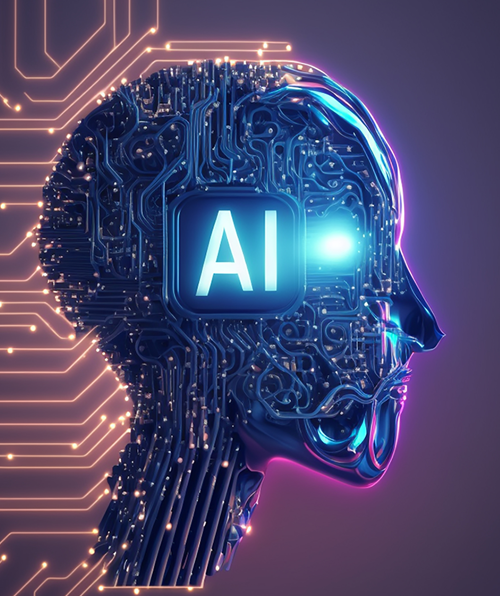


Most people had never heard of AI technologies until a year ago. These days, people use them on a regular basis to write content, create photos, automate processes, and even help with coding. That change has happened quickly and won’t slow down.
As a result, a lot of students are now wondering, “Where do I even start?” With so many tools and ideas available, understanding AI can seem intimidating.
A useful generative AI roadmap for beginners is broken down in this guide. not overly theoretical. Not perplexing. Just a clear route that you can truly take.
What is Generative AI?
The term “generative AI” describes systems that are capable of producing content rather than only processing data.
Traditional AI assists with classification and prediction. Going one step further, generative AI creates something new.
That could be:
- Text (like ChatGPT responses)
- Images (Midjourney or DALL·E)
- Code (AI-assisted programming tools)
- Audio or video
Fundamentally, generative AI makes use of models that have been trained on massive datasets to recognize patterns and produce outputs that resemble those of a person.
If you’ve used tools to write emails, make designs, or recommend code, you’ve previously engaged with generative AI.
Why Generative AI is the Future?
Generative AI is more than a passing trend. It is altering the way that work is done in all industries.
It helps marketing teams develop campaigns more quickly. It helps developers write code more quickly. It is used by businesses to automate content creation and communication.
According to a McKinsey report, generative AI could add $2.6 trillion to $4.4 trillion annually to the global economy across industries.
However, other reports point to AI and data-related jobs as some of the fastest-growing job sectors worldwide. Because of this, creating a generative AI learning route now can lead to opportunities in a variety of fields, including technology, business, content, and more.
Skills Required to Learn Generative AI
You don’t need to be an expert coder to begin. But you do need a mix of technical and practical skills. Here’s what typically matters:
Basic Programming (Optional but Helpful)
Languages like Python are commonly used in AI. Even basic familiarity can help you understand how models work.
Understanding of AI Concepts
You don’t need deep math, but knowing what models, datasets, and training mean is useful.
Prompting Skills
This is often underestimated. Knowing how to interact with AI tools effectively is a real skill.
Data Awareness
Understanding how data is structured, cleaned, and used improves your ability to work with AI outputs.
Problem-Solving
AI is a tool. The real value comes from knowing how to apply it.
This combination forms the foundation of any practical generative ai roadmap for beginners.
Best Tools for Generative AI
One of the easiest ways to start is by using tools directly.
Here are some widely used platforms:
ChatGPT
Used for writing, coding assistance, research, and automation of text-based tasks.
Midjourney / DALL·E
AI image generation tools used for design, marketing creatives, and concept art.
GitHub Copilot
Helps developers write code faster by suggesting code snippets in real time.
Runway ML
Used for video generation and editing using AI.
Notion AI
Helps with productivity, documentation, and content structuring.
Using these tools regularly helps you understand how generative AI works in real-world scenarios.
Step-by-Step Roadmap to Become a Generative AI Engineer
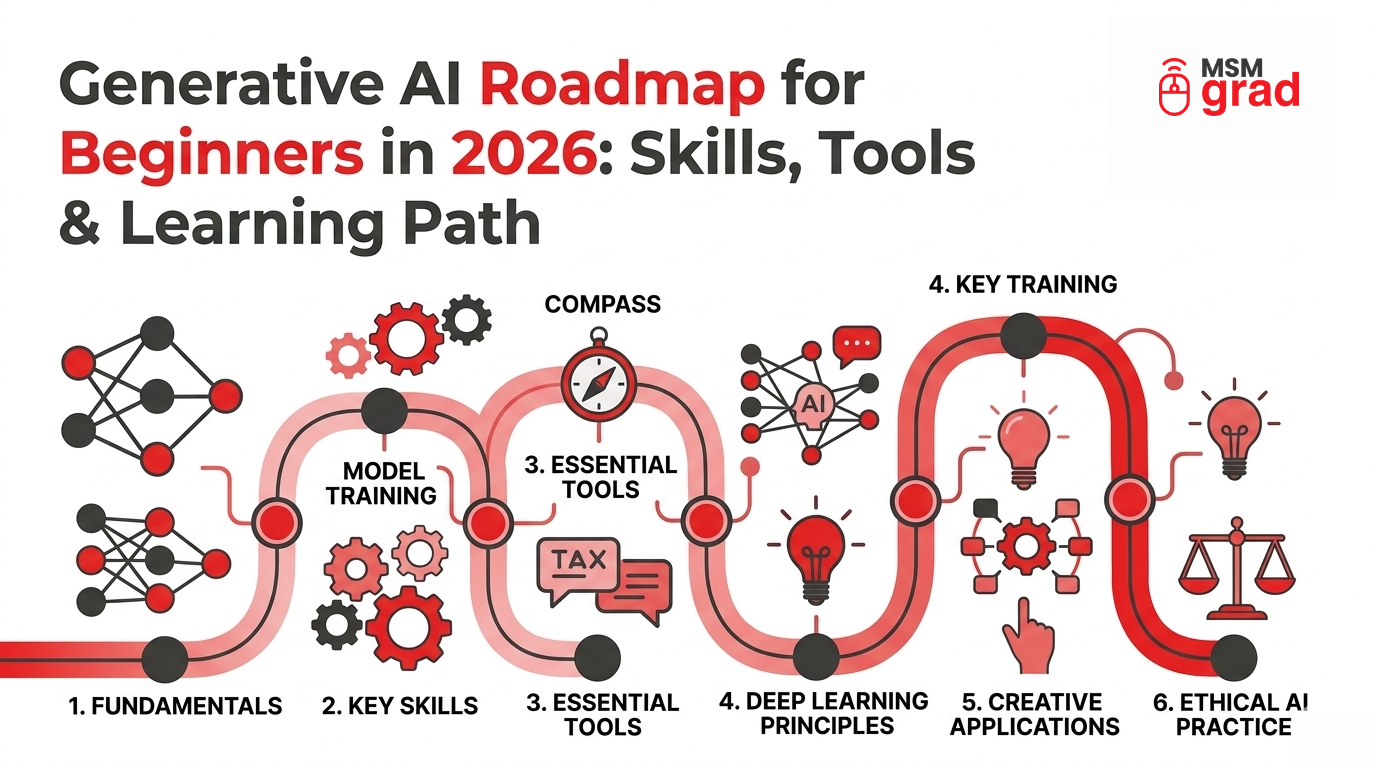
If you’re serious about building skills, here’s a practical generative ai roadmap you can follow.
Step 1: Understand the Basics
Start with simple concepts. What is AI? How does generative AI differ from traditional AI?
Step 2: Use AI Tools Daily
Don’t just read about tools. Use them. Experiment. Try writing prompts, generating images, or automating tasks.
Step 3: Learn Prompt Engineering
Better prompts lead to better results. This is one of the fastest ways to improve your output quality.
Step 4: Learn Python (Optional but Valuable)
If you want to go deeper, learning Python helps you work with AI libraries and APIs.
Step 5: Work on Small Projects
Examples:
- Build a content generator
- Create AI-based workflows
- Automate repetitive tasks
Projects make your learning practical and visible.
Step 6: Understand APIs and Integration
Learn how AI tools connect with applications. This is where real-world use cases come in.
Step 7: Keep Updating Skills
AI evolves quickly. Continuous learning is part of the journey.
Following this generative ai learning path helps you move from beginner to practical user without feeling lost.
Best Generative AI Certification Courses
While self-learning works, structured programs can help you move faster.
Good certification programs focus on:
- Practical use cases
- Hands-on projects
- Real-world applications
- Industry-relevant tools
They also give a defined path, which is frequently lacking when students rely solely on scattered web content.
Platforms such as MSM Grad provide programs that assist learners grasp generative AI in an organized and practical approach. Instead of focusing solely on theory, these programs highlight how AI is applied across industries, which is what companies need.
Final Thoughts
Learning AI does not imply that you will become a researcher or engineer overnight. It all starts with learning the tools, then exploring and progressively developing skills. A concise generative AI roadmap for beginners reduces uncertainty and provides direction. The idea is to gradually increase capability rather than learning everything all at once.
As generative AI continues to influence sectors, those who understand how to properly apply it will have a significant advantage. The opportunity extends beyond simply understanding that AI exists. It is all about knowing how to apply it.